Yara Perry · 10 October 2026
Examining Retention Dynamics Through Behavioral Clustering in Invitation-Based Digital Communities
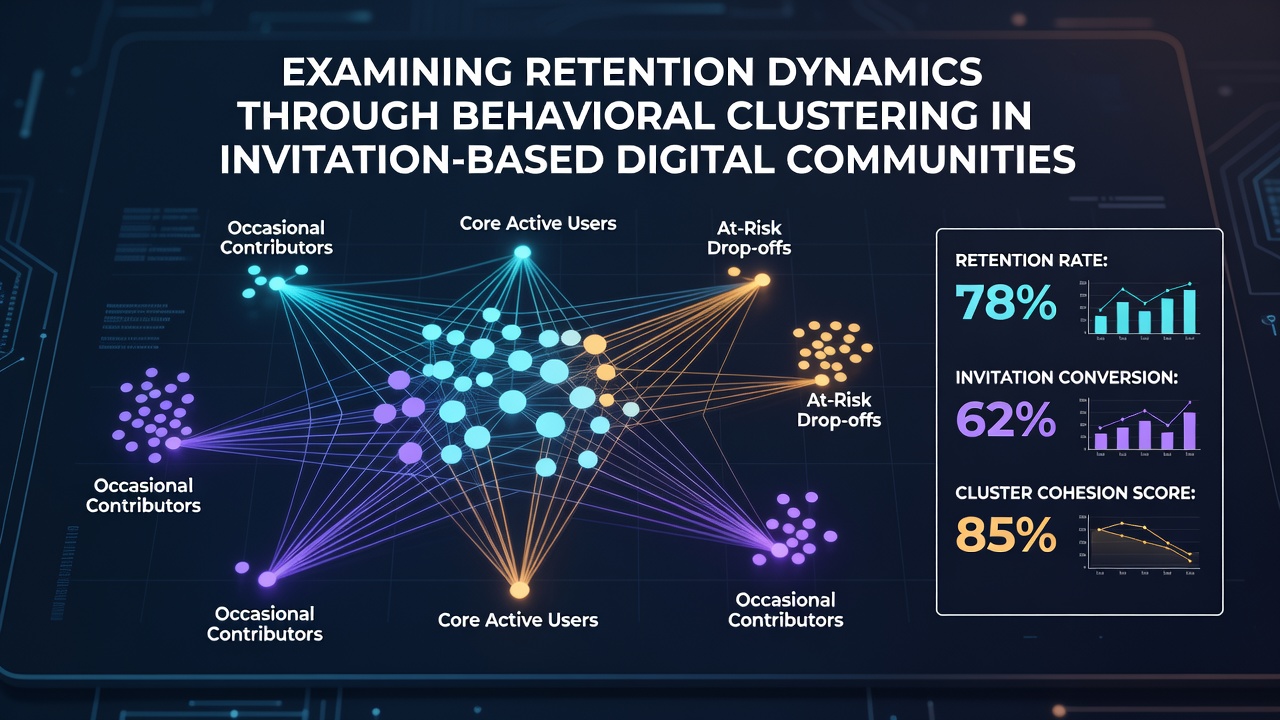
Invitation-based digital communities operate through controlled entry mechanisms where existing members extend access to new participants, and this structure generates distinct patterns in how users engage over time. Researchers apply behavioral clustering techniques to large datasets of user activity logs in order to group individuals according to shared traits such as session frequency, content interaction depth, and referral activity, while retention metrics track the duration between initial join dates and subsequent departure points.
Clustering methods like k-means and hierarchical algorithms process variables including message volume, response latency, and connection formation rates, and these groupings reveal segments that demonstrate higher or lower likelihoods of sustained participation. Data from multiple platform studies indicate that tightly knit clusters often maintain elevated retention when members exchange frequent invitations, whereas isolated clusters show accelerated churn after the first thirty days.
Core Mechanisms in Invitation-Based Structures
Platforms that rely on invitations limit public discovery and instead route growth through personal networks, and this approach influences both the composition of user bases and the stability of engagement levels. Analysts examine timestamped records of invite acceptances alongside daily activity scores to identify which behavioral clusters correlate with prolonged membership spans, and findings from longitudinal tracking show that clusters centered on collaborative content creation retain members at rates exceeding those focused solely on passive consumption.
October 2026 marked expanded adoption of real-time clustering dashboards within several community management tools, allowing moderators to monitor shifting group behaviors without manual intervention. These tools integrate data streams from mobile and desktop clients, and the resulting insights help adjust invitation policies to favor clusters associated with stronger retention outcomes.
Application of Clustering Algorithms to Retention Data
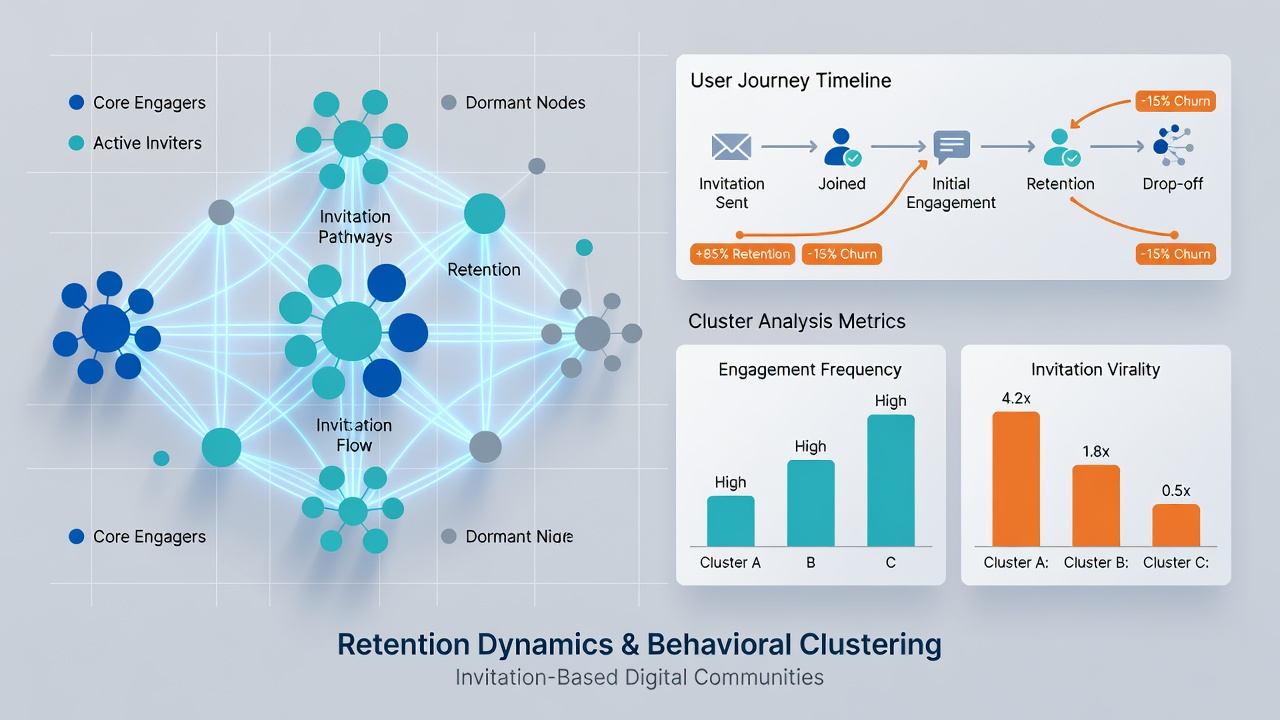
Behavioral clustering begins with feature extraction from anonymized logs that capture metrics such as average session length, thread initiation counts, and cross-member mention frequency, after which dimensionality reduction techniques simplify the dataset for algorithmic processing. Researchers at various institutions have documented how clusters labeled as "core contributors" exhibit retention curves that plateau after initial onboarding, whereas "peripheral observers" display steeper declines unless additional invitations re-engage them within specific windows.
One study published through academic channels highlighted connections between invitation chain length and cluster stability, noting that longer referral sequences tend to produce more homogeneous behavioral groups with improved long-term participation. Platforms implement these models to predict churn probabilities, and adjustments to invitation criteria based on cluster predictions have produced measurable shifts in overall cohort retention figures.
Observed Patterns Across Community Types
Specialized forums in technology and creative fields demonstrate pronounced differences in retention when segmented by behavioral clusters, with high-interaction groups sustaining activity through ongoing invitation cycles while low-engagement segments require targeted reactivation prompts. According to Pew Research Center findings on online engagement, communities with structured invitation processes maintain higher proportions of active users compared to open registration models, and clustering analysis further refines this understanding by isolating the precise activity signatures driving those differences.
European data protection frameworks have prompted platforms to refine how they handle behavioral data for clustering purposes, and compliance measures now include transparent consent flows that precede any segmentation of user records. Observers note that clusters formed around shared professional interests retain members longer during economic shifts, whereas hobby-focused clusters show greater sensitivity to seasonal fluctuations in participation levels.
Integration With Platform Infrastructure Adjustments
When platforms undergo backend changes such as updated notification systems or revised privacy controls, behavioral clusters respond differently, and monitoring these responses allows operators to anticipate retention impacts before they compound. Clusters characterized by high referral output often buffer against temporary disruptions, while those dependent on external discovery channels experience sharper drops until invitation flows resume normal volumes.
Reports from research institutions in Canada and Australia have tracked similar patterns across regional community platforms, confirming that proactive cluster-based interventions, such as personalized invitation reminders, stabilize retention metrics during transition periods. These interventions rely on historical cluster data to forecast which segments benefit most from targeted outreach.
Conclusion
Behavioral clustering provides a structured lens for dissecting retention dynamics within invitation-based digital communities, and ongoing refinements in algorithmic approaches continue to sharpen the identification of high-value user segments. Data collected through 2026 demonstrates consistent correlations between cluster composition and membership longevity across multiple platform types, while external regulatory developments shape how such analysis proceeds. Continued examination of these patterns supplies platform operators with actionable information derived directly from observed user behaviors and engagement trajectories.