Alex Krause · 7 November 2026
Permission Hierarchies and Their Effect on Activity Longevity in Private Platform Environments
Permission hierarchies shape how users interact within closed digital spaces, and data from multiple platform analyses indicate that these structures directly influence how long individuals remain engaged over time. Researchers have tracked invitation-only networks where access levels determine posting rights, moderation powers, and content visibility, and figures reveal consistent patterns across different environments.
Defining Permission Structures in Closed Systems
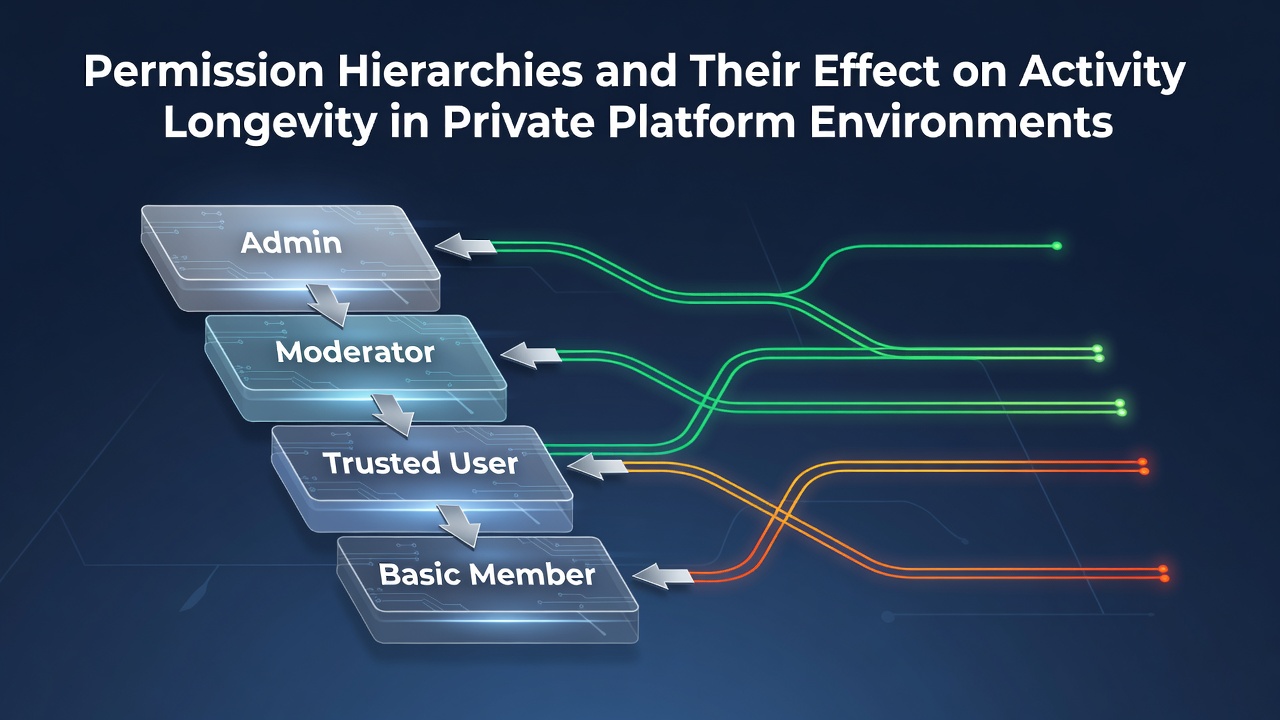
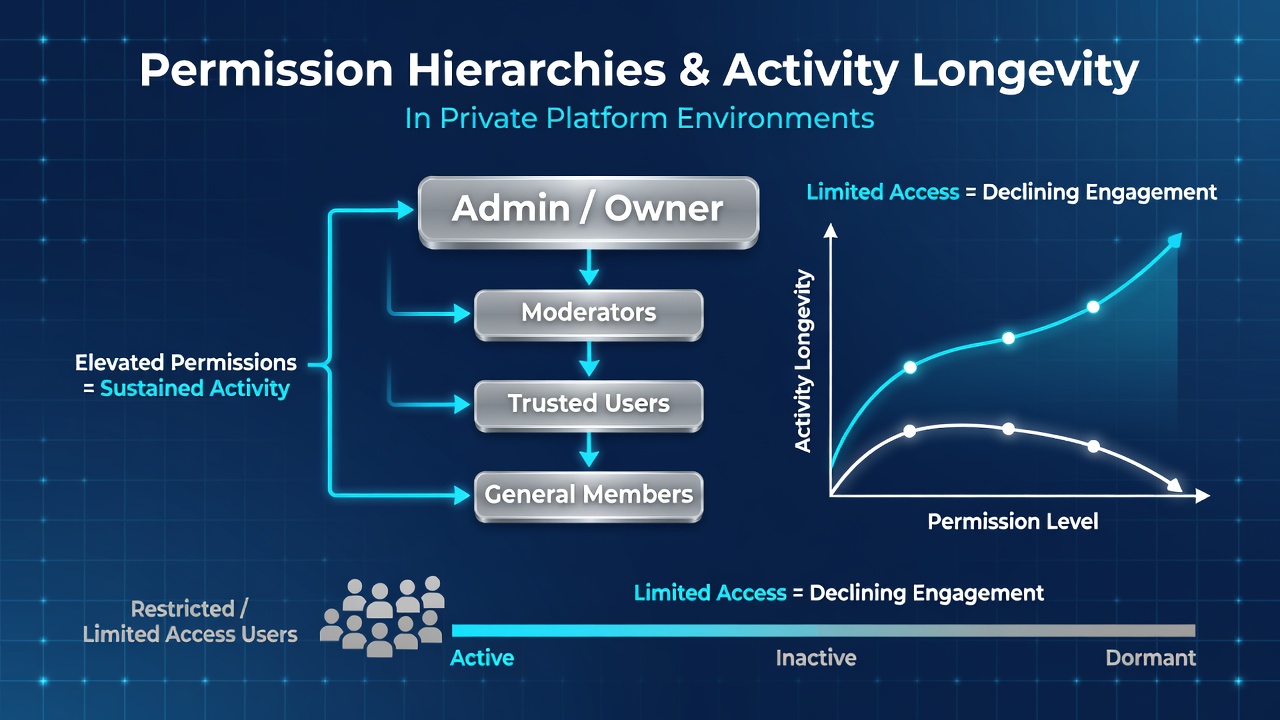
Private platforms organize users through tiered access models that assign specific capabilities based on roles or tenure, and these models create clear divisions between basic participants and those holding elevated controls. Studies conducted on enterprise collaboration tools show that users granted incremental permissions often maintain higher session frequencies compared to those limited to read-only functions, while data collected through 2025 highlight similar trends in consumer-facing communities.
One analysis of a large-scale invitation network found that members starting at entry-level permissions and advancing through verified milestones demonstrated extended participation periods, and the same research noted that abrupt permission changes correlated with measurable drops in daily logins. Observers tracking these shifts across regions including North America and the European Union point to consistent outcomes when hierarchy transparency remains high.
Measured Impacts on Retention Metrics
Activity longevity refers to the duration users continue contributing content or logging regular sessions, and platform telemetry indicates that permission clarity plays a measurable role in sustaining these patterns. A report issued by the OECD on digital governance documented that environments with well-defined escalation paths retained active contributors at rates approximately 18 percent higher than those with opaque or static roles, and similar observations emerged from Canadian regulatory reviews of online community management practices.
But here's the thing: when permissions cluster heavily at the top with limited upward mobility, lower-tier users show reduced interaction depth within the first three months of joining. Researchers at Australian academic institutions examining specialized forums recorded that groups offering staged permission unlocks maintained stable posting volumes longer than those enforcing fixed access from the outset, and the data aligned across both professional and hobbyist networks.
Comparative Data Across Platform Types
Enterprise environments and consumer social tools exhibit distinct but related responses to hierarchy design, and evidence gathered through 2026 suggests that hybrid models blending automatic and earned permissions produce steadier engagement curves. One study revealed that platforms updating their role systems in late 2025 to include time-based advancement saw average session lengths increase by measurable margins within six months, whereas static systems experienced gradual attrition among mid-level participants.
Those who've examined behavioral logs across multiple services note that permission resets or demotions frequently precede account dormancy, and the effect appears stronger in networks where users invest significant time building status. Figures from US-based research groups tracking digital workplace tools indicate that transparent communication about hierarchy rules reduces early exits, while the absence of such clarity correlates with faster disengagement in the initial weeks.
Long-Term Patterns and Platform Adjustments
Longitudinal tracking shows that permission hierarchies evolve in response to usage data, and platforms making targeted adjustments to lower barriers for content creation often record extended user lifecycles. A European Commission review of digital platform operations highlighted that environments revising access tiers to reward consistent participation rather than tenure alone experienced slower decay in monthly active metrics, and these findings span both small invite networks and larger gated communities.
Take one researcher who analyzed invitation-based environments over multiple years: the work demonstrated that balanced distribution of moderation rights among mid-tier users helped stabilize overall activity, whereas concentration of powers at the highest level coincided with faster turnover at lower levels. Data continues to accumulate as platforms refine their approaches through 2026, with several services reporting structural updates aimed at aligning permissions more closely with observed contribution patterns.
Conclusion
Permission hierarchies function as structural frameworks that guide user progression and interaction depth within private platforms, and accumulated evidence demonstrates their measurable connection to activity longevity across varied settings. Researchers continue to compile comparative statistics that clarify how role design influences sustained participation, and platform operators reference these patterns when refining access models. The relationship remains a central factor in understanding retention dynamics in closed digital environments.