Yara Perry · 26 September 2026
Tracing Connection Patterns in Adaptive Community Ecosystems
Understanding Adaptive Community Structures
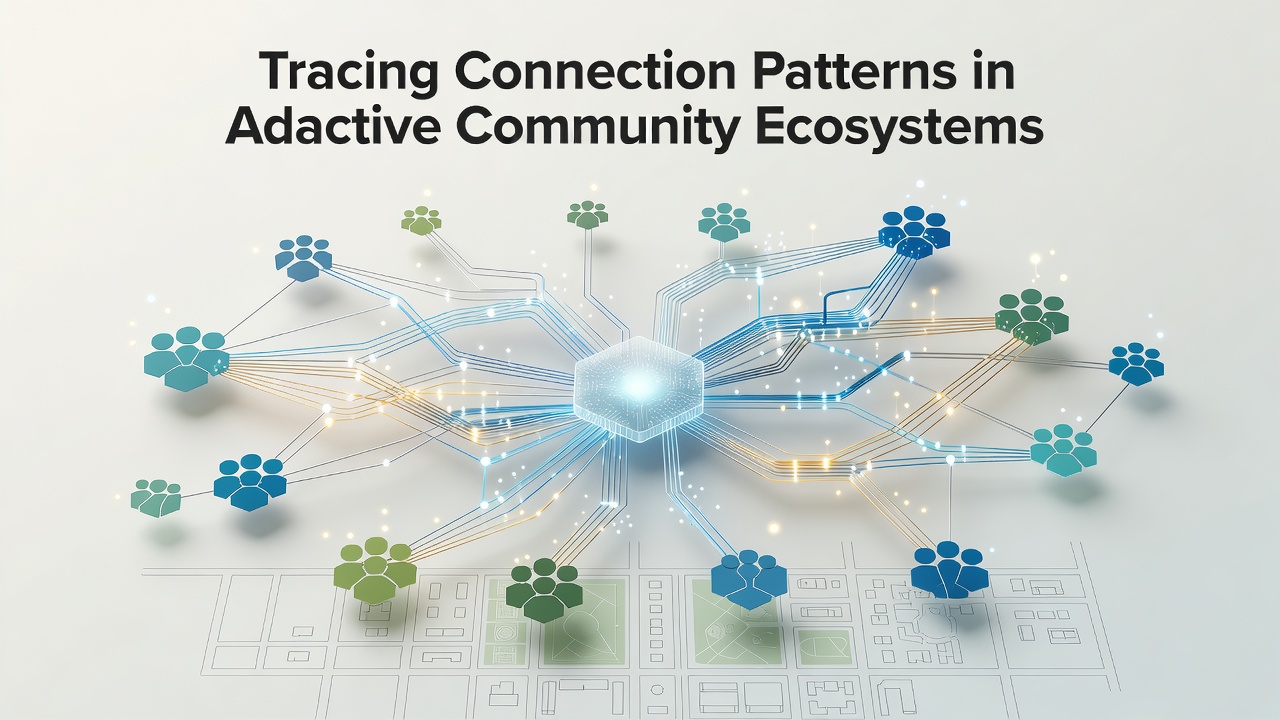
Adaptive community ecosystems consist of interconnected groups that shift their relationships over time based on external pressures and internal dynamics, and researchers track these changes through connection pattern analysis which reveals how information flows between participants while resources redistribute across the network. Data from longitudinal studies indicate that these patterns emerge when communities respond to technological updates or membership fluctuations, whereas static models fail to capture the ongoing adjustments that occur in real-world settings.
Observers note that mapping these connections requires tools capable of handling temporal data because relationships form and dissolve at varying rates depending on the community's purpose and scale. One study released by the National Science Foundation in 2024 demonstrated how graph theory applications identify core nodes that maintain stability even as peripheral connections adapt rapidly to new conditions.
Methods for Mapping Evolving Links
Researchers apply social network analysis techniques combined with machine learning algorithms to trace connection patterns, and these approaches process large datasets collected from online platforms where users interact through forums, shared projects, and collaborative tools. Evidence from the European Commission's Joint Research Centre shows that temporal network models outperform traditional snapshots by accounting for sequential changes that unfold across weeks or months rather than isolated moments.
Analysts often integrate data from multiple sources including activity logs and participation records, while algorithms detect clusters that form around shared interests or goals. Australian universities have contributed reports on how regional communities in the Asia-Pacific area exhibit distinct adaptation speeds compared to global networks, with figures revealing faster reconnection rates after disruptions in localized groups.
Technological Tools and Data Processing
Software platforms designed for network visualization allow teams to represent complex ecosystems through layered graphs, and these systems highlight pathways that carry the highest volume of interactions over extended periods. Processing power from cloud services enables real-time updates to these models, whereas earlier methods relied on manual coding that limited scale and accuracy.
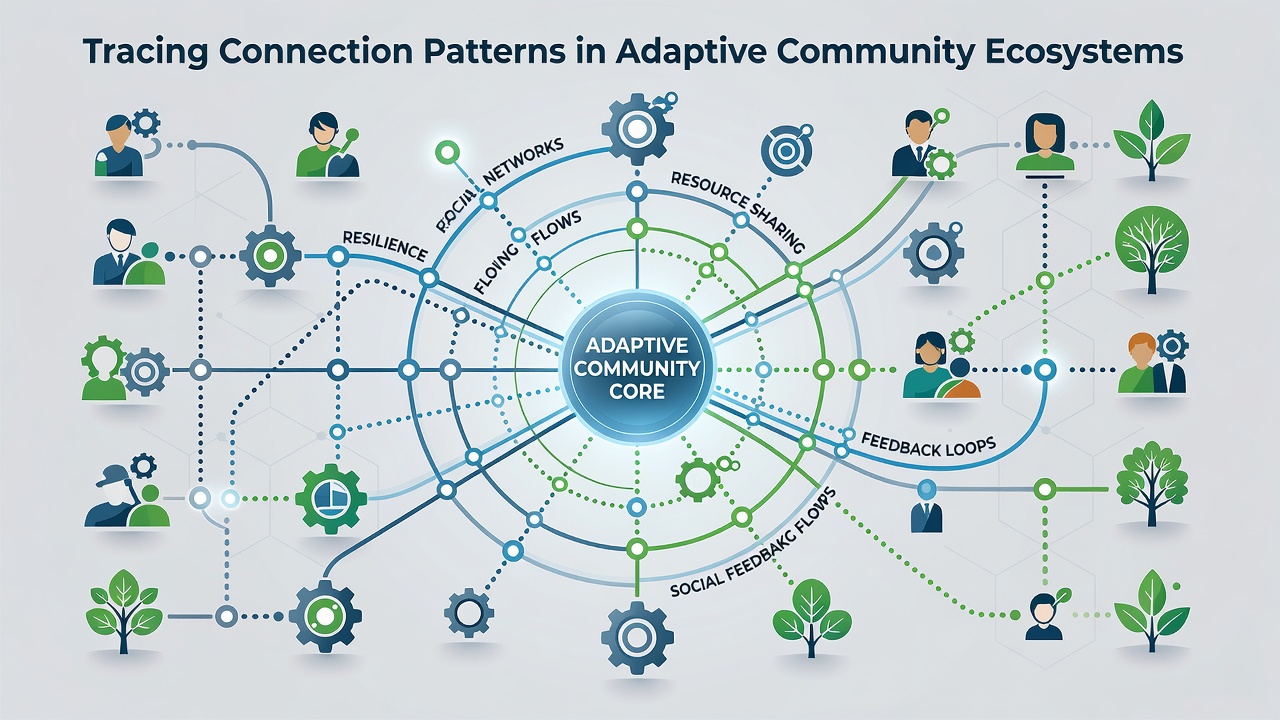
Developers incorporate features that flag emerging subgroups before they become dominant, and this capability supports proactive management in large-scale digital environments. Reports from Canadian research institutions detail how open-source libraries have lowered barriers for smaller organizations seeking to implement similar tracing capabilities without substantial infrastructure investments.
Case Examples from Digital Networks
Take one online education community that reconfigured its connection patterns following a platform migration in late 2025, and tracking data revealed that core moderators maintained links while new participants formed bridges to previously isolated sections. Such shifts illustrate how adaptive ecosystems preserve essential functions during transitions through redistributed pathways rather than complete rebuilding.
Another instance involves professional networks in creative industries where seasonal events trigger temporary clusters, and analysis shows these clusters dissolve predictably once the events conclude yet leave residual connections that influence future interactions. Industry reports compiled by the Interactive Digital Software Association highlight similar patterns across gaming communities where player alliances adapt based on game updates released throughout the year.
Developments Expected in September 2026
Upcoming conferences scheduled for September 2026 will present updated datasets on connection tracing methodologies, and organizers anticipate presentations covering refinements to algorithms that better handle multi-platform ecosystems. These gatherings typically draw participants from academic, governmental, and private sectors who share findings on how communities in different regions respond to policy changes or technological shifts.
Projections based on current trends suggest increased integration of predictive analytics that forecast pattern changes before they fully manifest, and early adopters have already begun testing these tools in controlled environments. Data released ahead of the events indicates growing interest from regulatory bodies seeking evidence-based approaches to oversight in digital spaces.
Challenges in Pattern Identification
Privacy regulations across jurisdictions create obstacles for comprehensive data collection because consent requirements vary and limit the scope of available information, while incomplete datasets can skew results toward more visible connections and obscure quieter but influential links. Technical limitations also arise when communities span multiple platforms with incompatible data formats, and teams must develop custom converters to unify records for analysis.
Scalability remains a concern for ecosystems with millions of members because computational demands grow nonlinearly with network size, yet advances in distributed processing have begun to address these constraints according to recent technical papers from institutions in Japan and South Korea.
Conclusion
Tracing connection patterns in adaptive community ecosystems provides measurable insights into how groups maintain coherence amid change, and ongoing refinements to analytical methods continue to expand the precision of these observations. Integration of findings from diverse geographic sources supports broader understanding of adaptation mechanisms that operate across cultural and technological contexts, while scheduled events in September 2026 promise additional data that will further inform practical applications in network management and research.